
The End of SEO: Why AI browsers reward Interactive Brands
Read Time 4 mins | Dec 8, 2025 11:15:00 AM | Written by: Marc Lamarche
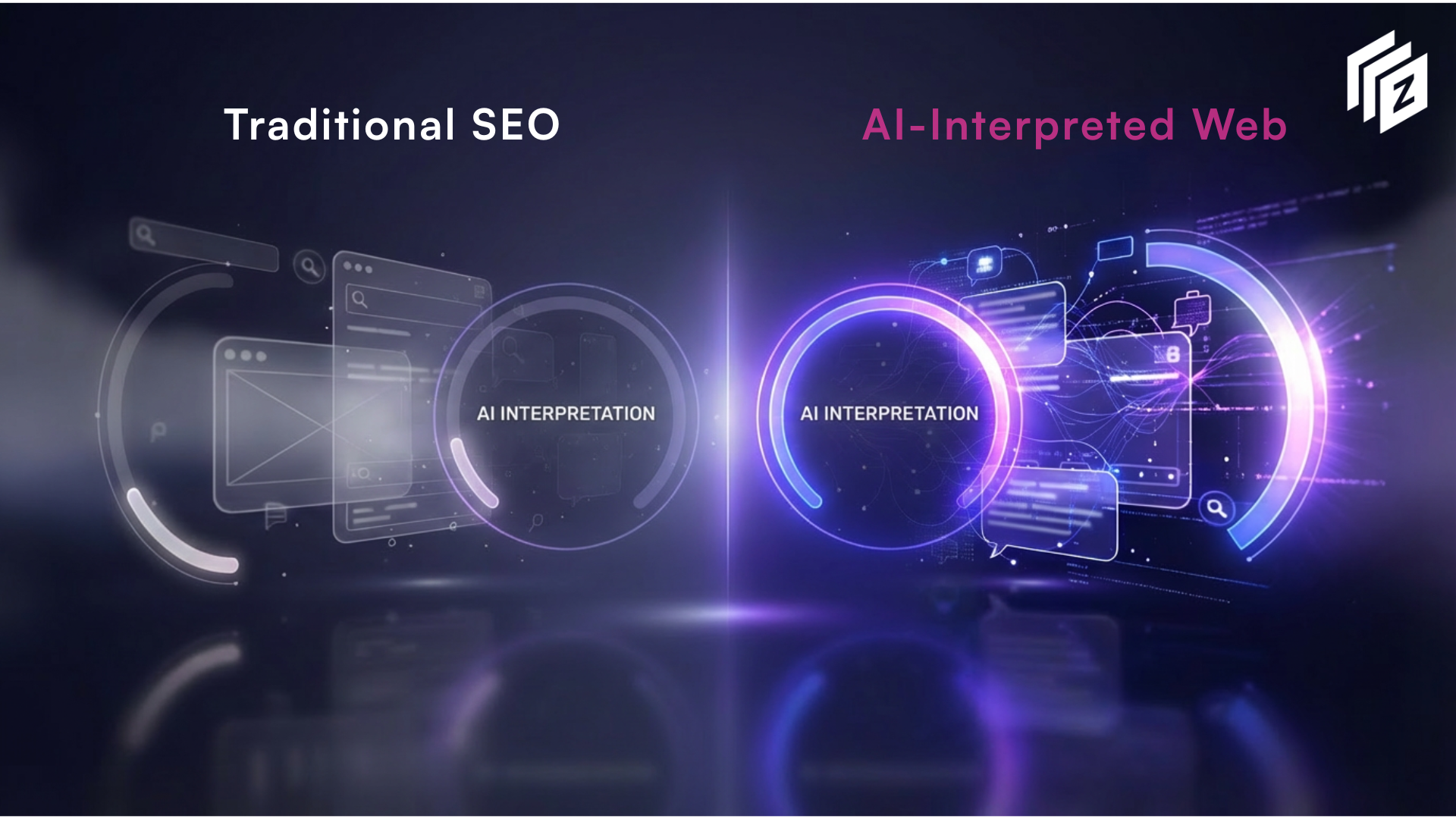
Search used to be simple....
Write good content, add keywords, collect backlinks — and hope Google liked you.
That playbook is breaking down.
Today, when someone asks “What’s the best eco-friendly perfume under 100 €?”, they don’t get a list of links anymore.
They get one conversational answer, crafted by AI systems like ChatGPT Atlas, Perplexity, or Bing Copilot.
These AI browsers don’t crawl websites like Google. They interpret meaning, structure, and engagement. And that’s quietly rewriting the rules of online visibility.
From SEO to AIO
Most SEO experts still rely on familiar tools: Schema.org markup, internal links, and keyword strategy.
That’s fine — but AI isn’t looking for keywords anymore.It’s looking for evidence of understanding.
Structured data still matters, but it’s no longer just there for decoration.
It’s how AI systems identify who you are, what you sell, and why you’re relevant.
They don’t just see a product page — they see a brand with context, a story encoded in structure and signals.
So yes, Schema.org stays.
But it’s not about earning a “featured result” anymore. It’s about teaching AI to trust your content.
Where the Real Shift Happens
The biggest transformation isn’t in metadata — it’s in behavior.
Static websites no longer tell AI anything about intent. Interactive websites do.
Imagine Noble Bazaar, a premium furniture website, where browsing isn’t just about scrolling.
As users explore collections or hover over products, the site detects interest and triggers a subtle Overlay inviting preferences or opening an AI agent that engages when the moment feels right.
That agent doesn’t start from zero — it’s triggered by real-time behavior, informed by micro-interactions, like a sales expert who’s been observing before starting a conversation.
This isn’t a gimmick. It’s what creates zero-party data — the information users willingly share through guided questions or contextual invitations.
Each action is a signal of intent, and to AI systems, intent equals trust.
Now the AI doesn’t just see a product catalog — it sees a brand capable of understanding and adapting to humans in real time.
Real-Time Behavior: The New Visibility Signal
Platforms like AB Tasty or Optimizely have long optimized conversion rates through A/B testing and segmentation.
But AI browsers take it further.
They observe how users interact — dwell time, scrolling, engagement — and detect when a site reacts to those signals instantly.
That’s where the difference lies: personalization that happens during the session, based on real-time behavior, not static targeting.
Whether it’s a dynamic product highlight, an AI assistant that appears at the right moment, or a contextual offer responding to hesitation — these real-time micro-interactions make the site feel alive.
And that liveliness matters: it’s becoming a key marker of relevance in AI interpretation models.
AI agents amplify this even further. By engaging based on detected behaviors and maintaining context from prior interactions, they simulate the intelligence of a real salesperson — one who knows when to speak, what to say, and when to step back.
That human-like awareness sends strong engagement and quality signals to AI browsers.
This is precisely where a new generation of interaction-layer technologies becomes relevant.
Its overlays transform passive browsing into adaptive dialogue — subtle, contextual, and deeply human.
Why This Matters Now
We’re entering the AIO era — AI Experience Optimization.
Search engines rewarded structure.
AI browsers reward interaction, relevance, and intent.
Tomorrow’s visibility will belong to brands that feel alive:
those that personalize in real time, capture declared preferences, and build continuity between visits.
Interactivity and zero-party data are no longer UX extras — they’re emerging as signals AI systems now pay attention to.
And the technology to make it happen?
Already here — designed to sit on top of your site, not replace it.
___________
Want to assess whether this shift already affects your site?
We’ve created a Post-SEO Conversion Checklist to help marketing and growth teams diagnose whether SEO still carries conversion — or whether AI-driven browsing has already changed the decision-making process.
👉 Download the Post-SEO Conversion Checklist (PDF)
https://blog.layerz.com/the-end-of-seo-why-ai-browsers-reward-interactive-brands