
Beyond the DOM: A Faster, Non-Invasive Way to Update Website Content
Read Time 3 mins | Nov 28, 2025 1:45:11 PM | Written by: Mike Rogers
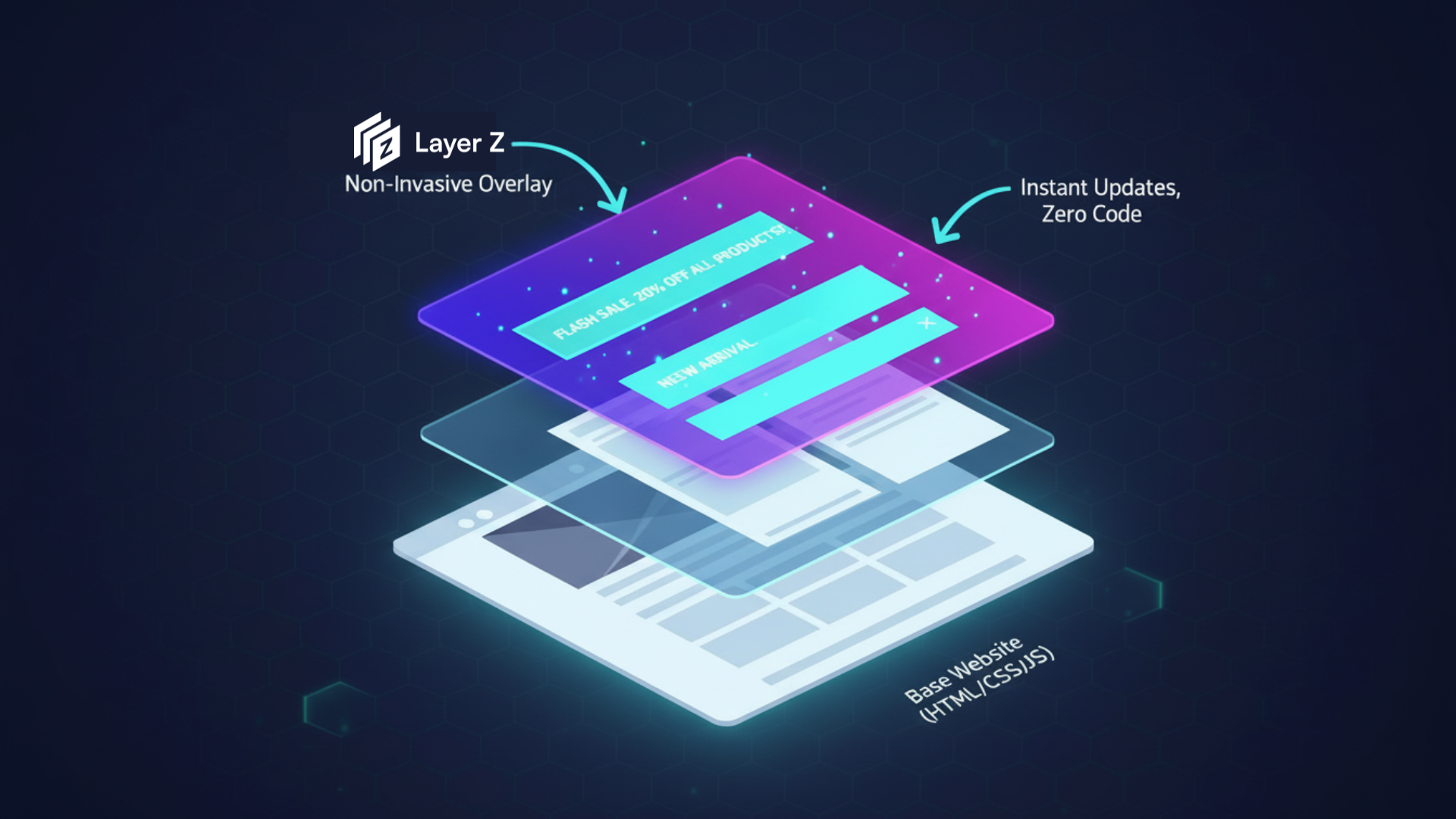
Updating live website content has long been a developer's responsibility—whether for a promotional banner, an urgent announcement, or a last-minute correction. Traditionally, the Document Object Model (DOM) and JavaScript have been the go-to solutions. However, as websites grow in complexity and businesses demand faster, more flexible content management, it’s time to rethink this approach. Enter Layer Z, a revolutionary content display technology that sidesteps traditional DOM manipulation in favor of a non-invasive, overlay-based system.
The Traditional Approach: DOM & JavaScript
For decades, web developers have relied on DOM manipulation to dynamically update website content. JavaScript is used to target, modify, and style specific HTML elements, making it possible to adjust live content in real time.
Pros of Using the DOM:
✔ Granular Control – Developers can modify specific elements with precision.
✔ Dynamic Updates – JavaScript enables real-time changes based on user interactions.
✔ Widely Supported – As a fundamental web technology, DOM manipulation works across all modern browsers.
Cons of Using the DOM:
⚠ Development Overhead – Requires coding expertise and can be time-intensive.
⚠ Risk of Errors – Incorrect manipulation can cause website breakage or unexpected behavior.
⚠ Performance Impact – Heavy DOM modifications can slow page load times and degrade responsiveness.
⚠ Invasive Approach – Changes directly alter the website’s core code.
While powerful, the DOM method introduces complexity and potential risks, particularly for non-technical users or businesses that need rapid updates. This is where Layer Z steps in.
Layer Z: A Paradigm Shift in Content Display
Rather than modifying the website’s underlying structure, Layer Z operates above the viewport, enabling seamless content overlays. This means businesses can deploy updates, promotions, and personalized messaging in minutes—without coding or disrupting the existing website framework.
Pros of Layer Z:
✅ No Coding Required – Non-technical users can create and publish overlays without developer intervention.
✅ Rapid Deployment – Content updates happen instantly without modifying core website code.
✅ Non-Invasive – Overlays sit above the site, preserving its structure and functionality.
✅ Enhanced Engagement – Overlays capture user attention more effectively than embedded elements.
✅ Zero Impact on Performance – Unlike DOM-heavy updates, Layer Z overlays don’t slow down site load times.
✅ Flexibility – Content can be changed or removed in minutes, adapting to evolving business needs.
The Key Difference: Invasiveness vs. Overlay
At its core, the difference between DOM manipulation and Layer Z overlays lies in how content is applied:
🛠 DOM & JavaScript: Directly alters the website’s structure—ideal for complex, logic-driven updates deeply integrated into the site.
🎨 Layer Z Overlays: Sits above the existing page—perfect for fast, flexible content changes that don’t interfere with the site’s codebase.
Choosing the Right Tool for the Job
When should you use DOM & JavaScript, and when does Layer Z make more sense?
| Scenario | Best Solution |
|---|---|
| Making fundamental structural or logic-based site updates | DOM & JavaScript |
| Deploying quick, non-invasive content changes (promotions, banners, notifications) | Layer Z |
| Implementing complex UI components within the page’s layout | DOM & JavaScript |
| Personalizing content dynamically without modifying site code | Layer Z |
The Future of Content Display
As websites become more dynamic and user-centric, businesses need solutions that enable speed, flexibility, and engagement. Layer Z represents a shift in how content is managed, empowering teams to respond quickly to market changes, deliver personalized experiences, and optimize user interactions without the technical overhead of traditional methods.
While DOM and JavaScript remain essential tools in web development, Layer Z introduces a new, non-invasive approach that complements existing strategies. By adopting this hybrid mindset, businesses can streamline content management and unlock new engagement opportunities.
Let’s Discuss:
💡 What challenges have you faced with DOM-based content updates?
💡 How do you see Layer Z’s overlay technology transforming website content management?
💡 What innovative use cases can you envision for content overlays in e-commerce and beyond?
I’d love to hear your thoughts! 🚀